For decades, humanoid robots lived on magazine covers and research floors. That era is ending. Advances in actuators, batteries, perception and artificial intelligence have pushed walking, seeing, reasoning humanoids into warehouses, hospitals, shops and — soon — homes. The question is no longer whether we will share space with human-shaped machines, but how well we will do it. And that turns out to be part psychology and part engineering.
Why humanoids, and why now
The world is built for the human body — our doorways, tools, stairs and vehicles all assume human proportions. A robot shaped like us can, in principle, operate in that world without rebuilding it. Several technologies matured at once to make this practical: compact high-torque actuators, energy-dense batteries, cheap and capable sensors, and AI models that can perceive a scene and plan actions. Together they turned the humanoid from a demo into a tool.
The psychology of a machine that looks human
Something changes in us the moment a machine has a face, two arms and a walking gait: we instinctively treat it as a social being. This is powerful and useful — but it also creates traps.
- Anthropomorphism: we automatically assume a human-shaped robot understands us, has intentions, and shares our common sense. It usually does not, and mismatched expectations cause frustration and mistakes.
- The uncanny valley: a robot that is almost, but not quite, human can feel unsettling. Comfort depends on getting appearance and behaviour to match.
- Trust calibration: people tend to either over-trust a confident-looking robot or reject it entirely. Healthy interaction means trusting it exactly as much as it deserves — no more, no less.
Learning to interact well begins with understanding these reactions in ourselves, so we can work with a humanoid as the capable-but-limited machine it is.
Trust is earned in milliseconds
Humans decide whether they feel safe around a robot in the first seconds, largely from how it moves. A robot whose motion is smooth, predictable and "legible" — where you can read what it is about to do — feels trustworthy. Jerky, sudden or ambiguous movement feels threatening, even if it is perfectly safe. This is why good robotics teams spend enormous effort not just on what a robot does, but on how visibly and predictably it does it.
The technical foundation of safe interaction
Comfort and safety around humanoids rest on serious engineering underneath:
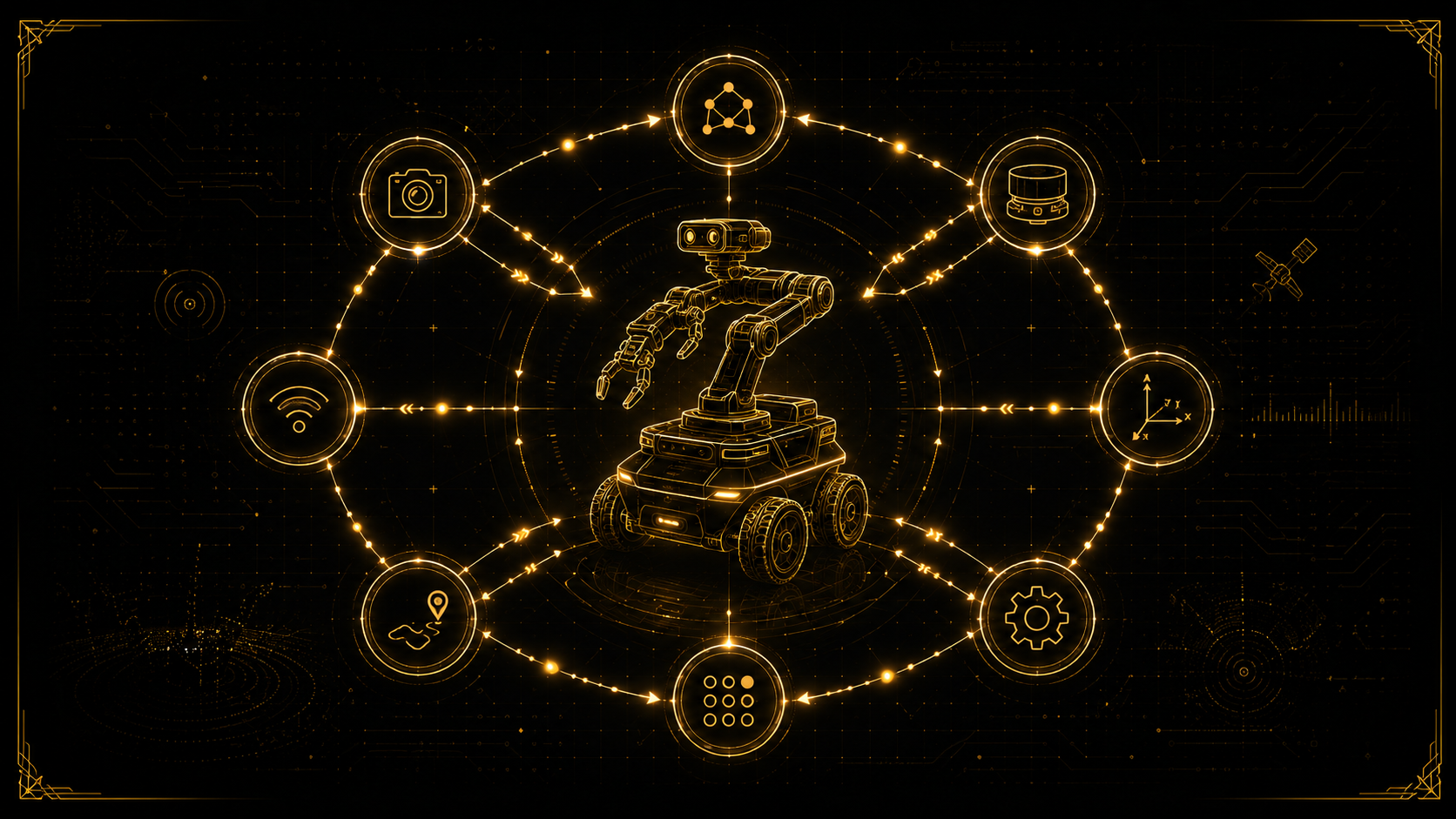
- Perception and sensor fusion: cameras, depth sensors, LiDAR and inertial units combine so the robot reliably knows where people are, in real time.
- Force and torque sensing: the robot must feel contact and yield gently, so a touch is a touch and not an injury.
- Real-time control: balance, reaction and stopping must happen within tight, guaranteed time limits — this is classic embedded engineering.
- Safety standards and redundancy: collaborative-robot standards, emergency stops, speed and force limits, and independent safety channels ensure a single failure cannot cause harm.
The feeling of "this robot is safe to be near" is not an accident — it is the visible result of this hidden work.
Communication that goes both ways
Real interaction is a two-way street. A humanoid should signal its intent — with gaze, gesture, posture, light or sound — so a person can anticipate it. Equally, the robot must read human signals: speech, pointing, body language, and simple presence. The best systems make this exchange feel natural, so a person does not need a manual to work alongside the machine. Designing that exchange is one of the most demanding and rewarding parts of modern robotics.
Why this is a skill to learn now
Interacting with humanoids is quickly becoming a practical, learnable skill — like driving or using a computer once were:
- For workers: knowing how to hand off tasks to a robot, interpret its signals, and stay safe will be an everyday competence in many industries.
- For organizations: teams that learn to collaborate with humanoids early will integrate them far more smoothly and safely than those who wait.
- For everyone: as these machines enter public and domestic life, basic fluency in how they perceive and behave will simply be part of living in a modern world.
Design for humans, not just for function
The lesson underneath all of this is that a humanoid robot is only as good as its relationship with the people around it. A machine can be technically brilliant and still fail if people find it confusing, frightening or untrustworthy. Getting this right means engineering the mechanics, the electronics and the software with human psychology in mind from the very first design decision — building robots that people can read, predict and trust.
If you are exploring humanoid or collaborative robotics — whether for industry, research or a product — and want it engineered to work safely and naturally alongside people, let's talk.