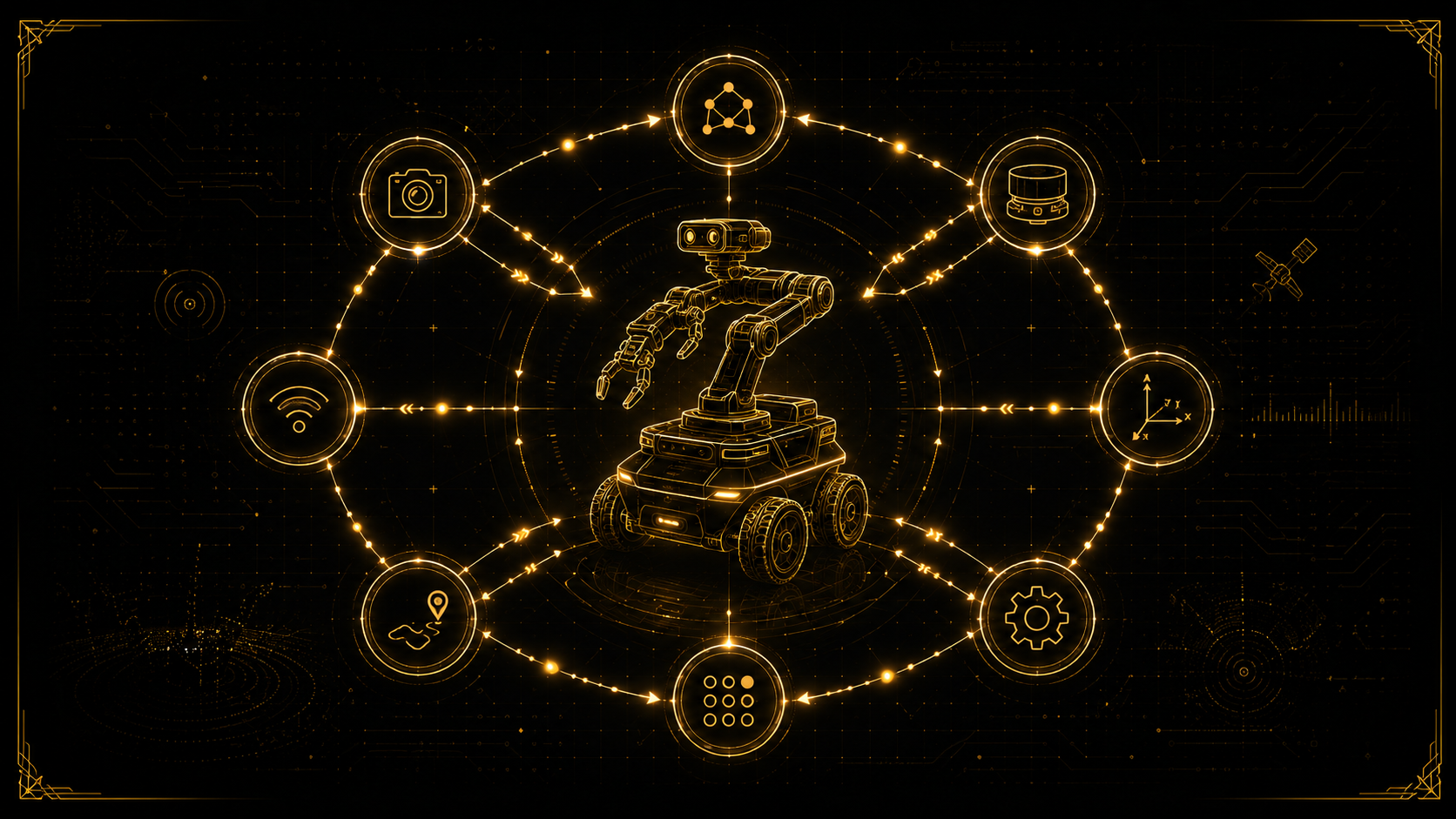
For most of history, the humanoid robot was a dream — a figure from stories and films, always a decade away. That is no longer true. Machines that walk, balance, see and manipulate the world in a human form are now real, and improving quickly. It is fair to ask whether this is worth the enormous effort, or merely an engineering vanity. The honest answer is that advancing humanoid robots addresses some of the most concrete pressures our societies face — and, along the way, it pulls the entire field of engineering forward.
Why the human form is worth the effort
Building a machine in our own shape is extraordinarily hard, so it needs a strong justification. That justification is simple: the world is already built for the human body. Our stairs, doorways, tools, vehicles, controls and workspaces all assume human size and reach. A robot shaped like us can, in principle, step into that existing world and do useful work without anyone rebuilding it. A specialised machine needs a specialised environment; a humanoid can adapt to ours. That flexibility is the whole point.
The demographic pressure
Across much of the world, populations are ageing and the workforce is shrinking. Industries from manufacturing to logistics to elder care already struggle to find enough people for essential, physically demanding jobs. This is not a distant forecast — it is happening now, and it will intensify. Humanoid robots offer one realistic way to keep vital work going as the number of available workers falls: not to replace people, but to fill the gaps that people can no longer fill.
The dangerous, the dull and the dirty
Some work should not be done by humans at all. Handling hazardous materials, working in extreme heat or cold, entering damaged or contaminated sites, or performing endlessly repetitive lifting that wears out human bodies — these are tasks where a capable humanoid can protect people from harm. Advancing these robots is, in part, a matter of removing humans from danger and drudgery, and letting them do work that actually needs human judgement and creativity.
A forcing function for all of engineering
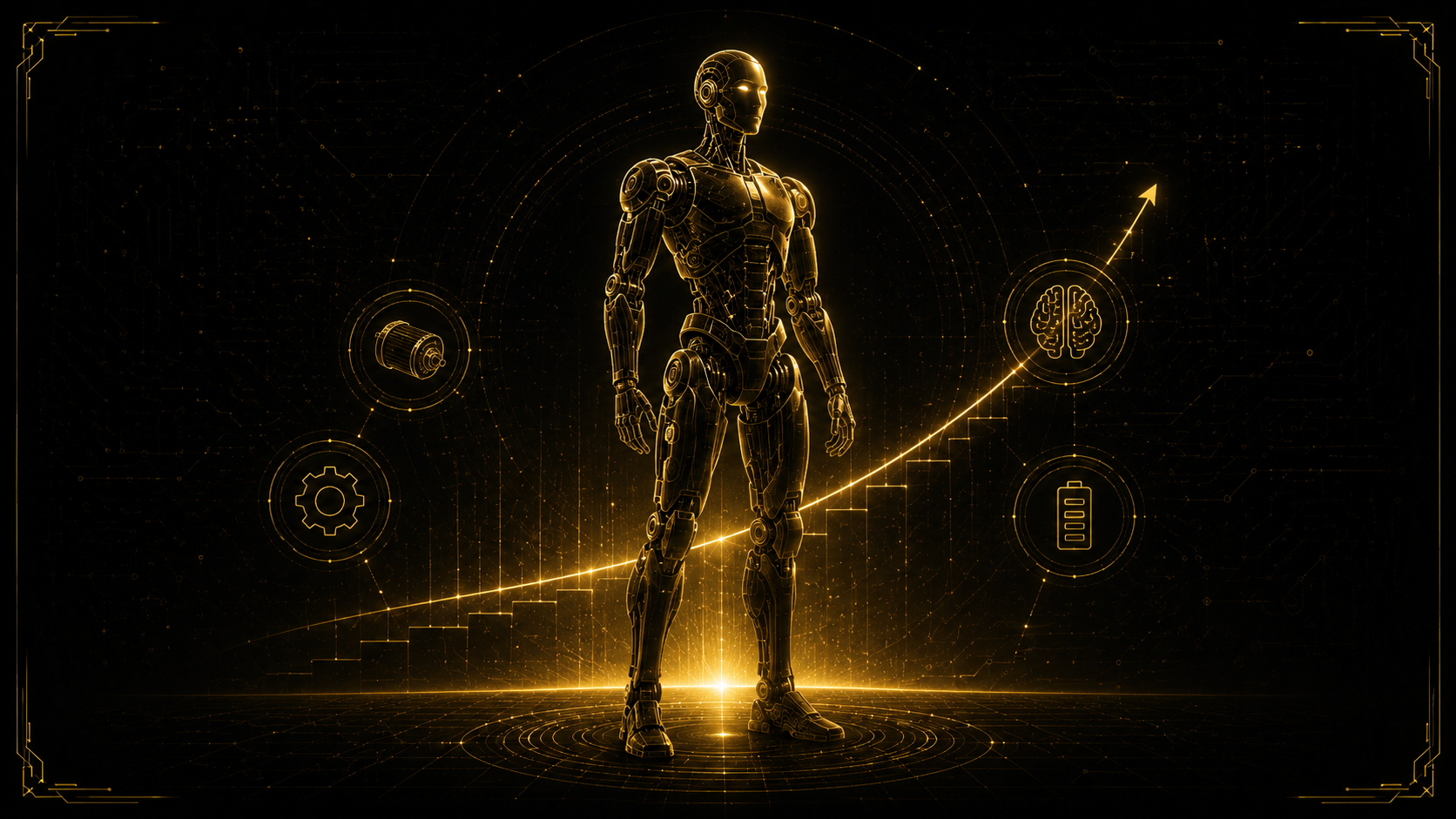
Here is what is often missed: the pursuit of a good humanoid drives progress far beyond the robot itself. To make one work, engineers must push the limits of many disciplines at once:
- Actuators and motors that are lighter, stronger and more efficient.
- Batteries and power systems with more energy in less weight.
- Sensors and perception that understand a messy, unpredictable world.
- Real-time control fast and reliable enough to keep a two-legged machine balanced.
- Artificial intelligence that turns perception into safe, sensible action.
Every advance made for a humanoid flows outward into prosthetics, electric vehicles, industrial automation, medical devices and more. The humanoid is a demanding goal that lifts the whole surrounding technology with it.
From single-purpose to general-purpose machines
Today most robots do one thing in one place — a fixed arm on a production line. The deeper promise of the humanoid is a shift toward general-purpose machines that can learn many tasks and move between them, the way a person can. Reaching that goal is enormously difficult, but it is the direction that would make robotics broadly useful rather than narrowly specialised. Progress on humanoids is, in effect, progress toward machines that can genuinely help across the messiness of real life.
The economic and strategic stakes
There is also a hard economic reality. The nations and companies that lead in humanoid robotics will shape the industries, supply chains and standards of the coming decades — just as leadership in computing and the internet reshaped the world before. Falling behind is not neutral; it means depending on others for a technology that will touch manufacturing, healthcare and infrastructure. This is a large part of why serious investment is flowing into the field right now.
Advancing them responsibly
None of this means charging ahead blindly. Progress worth having is progress made with care: robots that are genuinely safe around people, that respect human dignity, that are introduced in ways which support workers rather than simply displacing them, and that are built with clear thinking about ethics and accountability. The goal is not machines that replace what makes us human, but machines that extend what humans can do. Keeping that principle at the centre is itself part of advancing the technology well.
The engineering reality
Finally, it is worth being honest about the work involved. Progress in humanoids is not one dramatic breakthrough; it is thousands of hard, incremental improvements in mechanics, electronics, embedded control and software — each one making the machine a little more capable, a little safer, a little more reliable. That patient, layered engineering is exactly where the field advances, and exactly the kind of work that turns an impressive demonstration into a machine the world can actually depend on.
Robotics moves forward one careful engineering decision at a time. If you are working on robotics — humanoid or otherwise — and want a partner who understands that from the mechanics up through the embedded systems and control, let's talk.